 Elamur Locations
Pol-e Alam
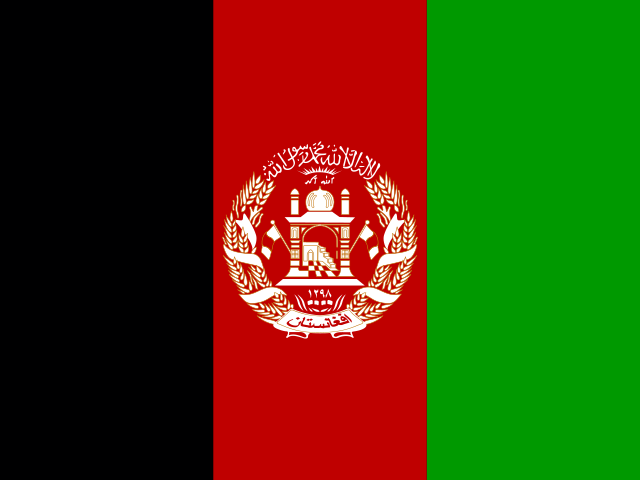 A settlement in Afghanistan; local name Puli Alam.
Forms of the name
- Puli Alam (official local form; used in Uzbek, English, Indonesian, Swedish, Azerbaijani) — The supplied Uzbek local name writes the linking vowel as part of «Puli». English and Indonesian Wikipedia also use this unhyphenated spelling.
- Pol-e ʿAlam (romanization, Scholarly Persian transliteration; used in English) — This rendering of the Dari name shows the ezafe linking vowel as «-e» and uses «ʿ» for the letter ‘ayn.
- ፑሊ አላም (exonym from Amharic; used in Amharic) — Amharic Ethiopic transcription based on «Puli Alam».
- بل علم (exonym from Arabic; used in Arabic) — The Arabic Wikipedia spelling is listed alongside the Uzbek name in the supplied local-name data.
- Пулі-Алам (exonym from Belarusian; used in Belarusian, Ukrainian) — Belarusian and Ukrainian share this hyphenated Cyrillic spelling with «і».
- পোল-ই আলম (exonym from Bengali; used in Bengali) — The Bengali Wikipedia title writes the linking vowel separately after a hyphen.
- Pul-i-Alam (exonym from German; used in German, Spanish (Latin America), Spanish (Spain), English, French, Italian, Malay, Indonesian, Finnish, Dutch, Polish, Danish) — This widely shared spelling separates the linking vowel «i» with two hyphens. It is the German, Spanish and Italian Wikipedia title.
- Πουλ-ι-Αλάμ (exonym from Greek; used in Greek) — The Greek spelling uses «ου» for the first vowel and marks final stress in «Αλάμ».
- Pul-i ‘Alam (exonym from Estonian; used in Estonian) — The Estonian Wikipedia title writes the linking vowel as «i» and marks ‘ayn with an opening quotation mark.
- پل علم (exonym from Persian; used in prs, Persian, Urdu) — The local Dari name is written in Perso-Arabic script. Iranian Persian and Urdu use the same spelling.
- Pol-é 'Alam (exonym from French; used in French) — The French Wikipedia spelling uses «é» for the linking vowel and an apostrophe for ‘ayn.
- પુલ-એ-આલમ (exonym from Gujarati; used in Gujarati) — The Gujarati label transcribes the linking vowel with «એ».
- פול-י עלם (exonym from Hebrew; used in Hebrew) — The Hebrew spelling uses «ע», the Hebrew counterpart of ‘ayn, in the second element.
- पुल-ए-आलम (exonym from Hindi; used in Hindi, Marathi) — Hindi and Marathi share this Devanagari transcription with «ए» for the linking vowel.
- Պուլի Ալամ (exonym from Armenian; used in Armenian) — Eastern Armenian transcription based on «Puli Alam».
- プリアラム (exonym from Japanese; used in Japanese) — The Japanese label gives a katakana transcription of «Puli Alam».
- პული ალამი (exonym from Georgian; used in Georgian) — Georgian transcription based on «Puli Alam», with the nominative ending «-ი».
- ಪುಲ್-ಇ-ಆಲಂ (exonym from Kannada; used in Kannada) — The Kannada label represents the linking vowel with «ಇ».
- 풀이알람 (exonym from Korean; used in Korean) — The Korean Wikipedia title uses «풀이» for the first element in Hangul.
- 풀리아람 (exonym from Korean; used in Korean) — The Korean Wikidata label gives another Hangul rendering of the syllables of «Puli Alam».
- Puli Alamas (exonym from Lithuanian; used in Lithuanian) — The Lithuanian form adds the masculine nominative ending «-as» to the second element.
- Puli Alama (exonym from Latvian; used in Latvian) — The Latvian form adapts the second element with the feminine nominative ending «-a».
- പുലി ആലം (exonym from Malayalam; used in Malayalam) — Malayalam script transcription based on «Puli Alam».
- पुली आलम (exonym from Nepali; used in Nepali) — Nepali Devanagari transcription based on «Puli Alam».
- ପୁଲି ଆଲମ୍ (exonym from Odia; used in Odia) — Odia script transcription based on «Puli Alam».
- ਪੁਲੀ ਆਲਮ (exonym from Punjabi; used in Punjabi) — Punjabi Gurmukhi transcription based on «Puli Alam».
- Pol-e 'Alam (exonym from Portuguese; used in Portuguese (Brazil), Portuguese (Portugal)) — The Portuguese Wikipedia title uses an apostrophe to represent ‘ayn in the Dari name.
- Пули-Алам (exonym from Russian; used in Russian, Bulgarian, Kazakh, Kyrgyz, Macedonian, Serbian, Tatar) — The Russian Cyrillic spelling uses «и» and a hyphen. It also serves as a transcription in several other Cyrillic alphabets.
- පල්-අයි-අලම් (exonym from Sinhala; used in Sinhala) — The Sinhala label uses «අයි» for the linking element.
- புல்-ஐ அலம் (exonym from Tamil; used in Tamil) — The Tamil Wikipedia spelling represents the linking element with «ஐ».
- పుల్-ఐ-ఆలం (exonym from Telugu; used in Telugu) — The Telugu label represents the linking element with «ఐ».
- ปูลีอาลัม (exonym from Thai; used in Thai) — The Thai label transcribes «Puli Alam» in Thai script.
- Pul-i Alem (exonym from Turkish; used in Turkish) — The Turkish Wikipedia title writes the second element as «Elem» with the initial vowel shown as «A», giving «Alem».
- 佩爾埃阿林 (exonym from Chinese; used in Chinese (Traditional)) — The Traditional Chinese label represents the name phonetically with Chinese characters.
- 佩尔埃阿林 (exonym from Chinese; used in Chinese (Simplified)) — The Simplified Chinese label represents the same syllables and uses simplified «尔».
- Pol-e Alam (variant; used in English, Luxembourgish, Galician, Dutch, Afrikaans, Polish, Swedish, Vietnamese, Romanian, Czech, Norwegian (Bokmål), Hungarian, Tagalog, Catalan, Croatian, Slovak, Zulu, Xhosa, Albanian, Slovenian, Swahili, Irish, Hausa, Yoruba, Welsh, Basque, Estonian, Icelandic, Maltese) — This widely shared Latin spelling writes the Dari linking vowel as «e» and omits the mark for ‘ayn».
- Pul-e Alam (variant; used in English) — An English spelling in reporting on Afghanistan that combines «Pul» with the linking vowel «e».
- Pol-e ‘Alam (variant; used in Estonian) — An Estonian alias with «e» for the linking vowel and an opening quotation mark for ‘ayn.
- Pul-i Alam (variant; used in Catalan, Estonian) — An attested Catalan and Estonian spelling with a hyphen before the linking vowel and a space after it.
- Пул-і-Алам (variant; used in Belarusian) — An alternative Belarusian spelling that gives the linking vowel its own hyphenated element.
- 普里阿楠 (variant; used in Chinese (Simplified), Chinese (Traditional)) — A Chinese phonetic alias recorded in Wikidata that ends in «楠».
- 普里阿蘭 (variant; used in Chinese (Traditional)) — A Traditional Chinese phonetic alias recorded in Wikidata that ends in «蘭».
Names in 79 languages
| Language | Name | Notes |
|---|---|---|
| English (en) | Pol-e Alam | The Dari linking vowel is written «e». «Puli Alam», «Pul-i-Alam» and «Pul-e Alam» are also used. |
| Spanish (Latin America) (es-419) | Pul-i-Alam | Spanish uses the hyphenated spelling with «i», ordinarily without an article. |
| Spanish (Spain) (es-ES) | Pul-i-Alam | Same as es-419. |
| German (de) | Pul-i-Alam | German uses the hyphenated spelling, ordinarily without an article. |
| Luxembourgish (lb) | Pol-e Alam | Same as English. |
| French (fr) | Pol-é 'Alam | French marks the linking vowel with «é» and ‘ayn with an apostrophe. The city name normally takes no article. |
| Japanese (ja) | プリアラム | Katakana transcription following «Puli Alam». |
| Chinese (Simplified) (zh-CN) | 佩尔埃阿林 | The Simplified Chinese phonetic transcription uses «尔». |
| Chinese (Traditional) (zh-TW) | 佩爾埃阿林 | The Traditional Chinese phonetic transcription uses «爾». |
| Russian (ru) | Пули-Алам | Russian uses a hyphenated Cyrillic transcription of «Puli Alam». |
| Arabic (ar) | بل علم | The Arabic transcription uses «ب» for the first consonant and has no definite article. |
| Italian (it) | Pul-i-Alam | Italian uses the hyphenated spelling, generally without an article. |
| Portuguese (Brazil) (pt-BR) | Pol-e 'Alam | The Portuguese spelling uses an apostrophe for ‘ayn and generally takes no article. |
| Portuguese (Portugal) (pt-PT) | Pol-e 'Alam | Same as pt-BR. |
| Galician (gl) | Pol-e Alam | Same as English. |
| Korean (ko) | 풀이알람 | Korean Wikipedia uses this Hangul transcription. «풀리아람» is also attested. |
| Hindi (hi) | पुल-ए-आलम | Devanagari transcription with «ए» for the linking vowel. |
| Urdu (ur) | پل علم | Urdu retains the Perso-Arabic spelling of the Dari name. |
| Turkish (tr) | Pul-i Alem | The Turkish spelling uses «Alem» for the second element. |
| Dutch (nl) | Pol-e Alam | Dutch Wikipedia uses the spelling with «e». «Pul-i-Alam» also occurs. |
| Afrikaans (af) | Pol-e Alam | Same as English. |
| Polish (pl) | Pol-e Alam | Polish Wikipedia uses the spelling with «e». «Pul-i-Alam» is also attested. |
| Swedish (sv) | Pol-e Alam | Swedish Wikipedia uses the spelling with «e». «Puli Alam» is also attested. |
| Malay (ms) | Pul-i-Alam | The Malay label uses the hyphenated spelling with «i». |
| Indonesian (id) | Puli Alam | Indonesian Wikipedia uses the unhyphenated form. «Pul-i-Alam» is also attested. |
| Bengali (bn) | পোল-ই আলম | Bengali script transcription with «ই» as the linking vowel. |
| Vietnamese (vi) | Pol-e Alam | Same as English. |
| Thai (th) | ปูลีอาลัม | Thai script transcription following «Puli Alam». |
| Romanian (ro) | Pol-e Alam | Same as English. |
| Czech (cs) | Pol-e Alam | Same as English. |
| Danish (da) | Pul-i-Alam | The Danish label gives the hyphenated spelling with «i» as its head form. |
| Norwegian (Bokmål) (nb) | Pol-e Alam | Same as English. |
| Hebrew (he) | פול-י עלם | Hebrew represents the second element with «ע», corresponding to ‘ayn. |
| Greek (el) | Πουλ-ι-Αλάμ | Greek transcription with «ου» for the first vowel and final stress in «Αλάμ». |
| Hungarian (hu) | Pol-e Alam | Same as English. |
| Finnish (fi) | Pul-i-Alam | The Finnish label uses the hyphenated spelling with «i». |
| Ukrainian (uk) | Пулі-Алам | Ukrainian uses Cyrillic «і» in the hyphenated transcription. |
| Persian (fa) | پل علم | Iranian Persian uses the same spelling as Dari. The linking vowel is generally unwritten. |
| Tamil (ta) | புல்-ஐ அலம் | The Tamil title represents the linking element with «ஐ». |
| Tagalog (tl) | Pol-e Alam | Same as English. |
| Telugu (te) | పుల్-ఐ-ఆలం | Telugu script transcription with «ఐ» for the linking element. |
| Marathi (mr) | पुल-ए-आलम | Same as Hindi. |
| Catalan (ca) | Pol-e Alam | The Catalan title uses the spelling with «e». «Pul-i Alam» is also attested. |
| Kazakh (kk) | Пули-Алам | Kazakh Cyrillic transcription following the Russian spelling. |
| Croatian (hr) | Pol-e Alam | Same as English. |
| Serbian (sr) | Пули-Алам | Serbian Cyrillic transcription following «Puli Alam». |
| Slovak (sk) | Pol-e Alam | Same as English. |
| Bulgarian (bg) | Пули-Алам | Bulgarian Cyrillic transcription following «Puli Alam». |
| Macedonian (mk) | Пули-Алам | Macedonian Cyrillic transcription following «Puli Alam». |
| Azerbaijani (az) | Puli Alam | Azerbaijani Wikipedia uses the unhyphenated Latin spelling. |
| Gujarati (gu) | પુલ-એ-આલમ | Gujarati script transcription with «એ» for the linking vowel. |
| Punjabi (pa) | ਪੁਲੀ ਆਲਮ | Gurmukhi transcription following «Puli Alam». |
| Malayalam (ml) | പുലി ആലം | Malayalam script transcription following «Puli Alam». |
| Kannada (kn) | ಪುಲ್-ಇ-ಆಲಂ | Kannada script transcription with «ಇ» as the linking vowel. |
| Uzbek (uz) | Puli Alam | The Uzbek Latin spelling is the supplied local name. |
| Zulu (zu) | Pol-e Alam | Same as English. |
| Xhosa (xh) | Pol-e Alam | Same as English. |
| Sinhala (si) | පල්-අයි-අලම් | Sinhala script transcription with «අයි» for the linking element. |
| Albanian (sq) | Pol-e Alam | Same as English. |
| Lithuanian (lt) | Puli Alamas | Lithuanian adds the masculine nominative ending «-as». |
| Slovenian (sl) | Pol-e Alam | Same as English. |
| Swahili (sw) | Pol-e Alam | Same as English. |
| Odia (or) | ପୁଲି ଆଲମ୍ | Odia script transcription following «Puli Alam». |
| Irish (ga) | Pol-e Alam | Same as English. |
| Hausa (ha) | Pol-e Alam | Same as English. |
| Yoruba (yo) | Pol-e Alam | Same as English. |
| Armenian (hy) | Պուլի Ալամ | Eastern Armenian transcription following «Puli Alam». |
| Amharic (am) | ፑሊ አላም | Amharic Ethiopic transcription following «Puli Alam». |
| Welsh (cy) | Pol-e Alam | Same as English. |
| Latvian (lv) | Puli Alama | Latvian adds the feminine nominative ending «-a» to the second element. |
| Tatar (tt) | Пули-Алам | Tatar Cyrillic transcription following the Russian spelling. |
| Nepali (ne) | पुली आलम | Nepali Devanagari transcription following «Puli Alam». |
| Georgian (ka) | პული ალამი | Georgian transcription following «Puli Alam», with nominative «-ი». |
| Belarusian (be) | Пулі-Алам | Belarusian uses this hyphenated Cyrillic form. The alternative «Пул-і-Алам» separates the linking vowel with a second hyphen. |
| Basque (eu) | Pol-e Alam | Same as English. |
| Estonian (et) | Pul-i ‘Alam | Estonian Wikipedia uses «i» for the linking vowel and marks ‘ayn. «Pol-e ‘Alam», «Pol-e Alam» and «Pul-i Alam» are also recorded. |
| Icelandic (is) | Pol-e Alam | Same as English. |
| Maltese (mt) | Pol-e Alam | Same as English. |
| Kyrgyz (ky) | Пули-Алам | Kyrgyz Cyrillic transcription following the Russian spelling. |
About
Pol-e Alam is the capital of Logar Province in eastern Afghanistan. It lies in the Logar River valley south of Kabul, along the road toward Gardez.
Notes
The supplied local name is Uzbek. The local-name data also list the Arabic label, which is an Arabic rendering of the place name. Dari and Pashto are Afghanistan's nationwide official languages.
Identifiers: Wikidata Q1006289 · JSON
This page as Markdown: https://md.locations.elamur.ai/free/en/afghanistan/pol-e-alam/