 Elamur Locations
Nakhchivan
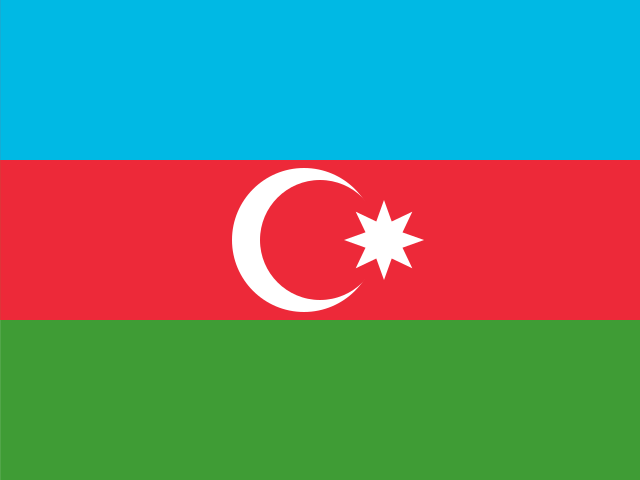 A settlement in Azerbaijan; local name Naxçıvan.
Forms of the name
- Naxçıvan (official local form; used in Azerbaijani, Catalan, German, Estonian, Italian, Polish, Swedish) — The official Azerbaijani Latin spelling uses x, ç and dotless ı. German, Italian, Catalan and Estonian sources also retain it.
- Nachitsjewan (exonym from Afrikaans; used in Afrikaans) — The attested Afrikaans form uses ch and tsj for the consonants and ends in -wan.
- ናኽቺቫን (exonym from Amharic; used in Amharic) — Amharic phonetic transcription in Ethiopic script based on the international spelling.
- نخجوان (exonym from Arabic; used in Arabic, Persian) — Longstanding Arabic-script spelling shared by Arabic and Persian.
- نقجوان (exonym from Arabic; used in Arabic) — An alternative Arabic spelling writes qaf in the first syllable.
- Нахічэвань (exonym from Belarusian; used in Belarusian) — Belarusian reference spelling uses і and э and retains the final soft sign.
- Нахичеван (exonym from Bulgarian; used in Bulgarian, Kyrgyz, Russian, Macedonian) — The attested Bulgarian and Kyrgyz spellings coincide with a Russian form without the final soft sign. Macedonian Cyrillic transcription gives the same spelling.
- নাখচিভান (exonym from Bengali; used in Bengali) — Attested Bengali-script adaptation of Nakhchivan.
- Nachičevan (exonym from Czech; used in Czech, Slovak) — Czech and Slovak use ch for the velar fricative and č for the affricate.
- Nakhitjevan (exonym from Danish; used in Danish) — The attested Danish spelling uses tj for the affricate.
- Nachitschewan (exonym from German; used in German, Afrikaans) — The traditional German transcription uses tsch and w and occurs in historical writing. It is also attested as an Afrikaans alternative.
- Ναχιτσεβάν (exonym from Greek; used in Greek) — Greek reference usage writes the affricate with τσ and marks final stress.
- Nakhchivan (exonym from English; used in English, Luxembourgish, French, Italian, Portuguese (Brazil), Portuguese (Portugal), Galician, Malay, Indonesian, Vietnamese, Tagalog, Zulu, Xhosa, Swahili, Irish, Hausa, Yoruba, Welsh, Icelandic, Maltese) — The conventional modern English spelling uses kh and ch for Azerbaijani x and ç. It is also widely used in other Latin-script languages.
- Najicheván (exonym from Spanish; used in Spanish (Latin America), Spanish (Spain)) — The Spanish exonym uses j and ch and marks final stress with an acute accent.
- Nakhitxevan (exonym from Basque; used in Basque) — Basque reference usage writes the affricate with tx.
- Nahitševan (exonym from Finnish; used in Finnish) — Finnish uses tš for the affricate in the traditional adapted name.
- Nakhitchevan (exonym from French; used in French) — The conventional French spelling represents the affricate with tch.
- નખચિવેન (exonym from Gujarati; used in Gujarati) — Attested Gujarati-script transcription of the city name.
- נחצ'יבאן (exonym from Hebrew; used in Hebrew) — The attested Hebrew spelling marks the affricate with tsadi and an apostrophe.
- नख़चिवन (exonym from Hindi; used in Hindi) — The attested Hindi transcription uses a nukta to represent the velar fricative.
- Nahičevan (exonym from Croatian; used in Croatian, Slovenian) — Croatian and Slovenian write the adapted name with h and č.
- Nahicseván (exonym from Hungarian; used in Hungarian) — Hungarian uses cs for the affricate and á for the long vowel.
- Նախիջևան (exonym from Armenian; used in Armenian) — The longstanding Armenian name is used in both historical and modern Armenian writing.
- Nahicivan (exonym from Italian; used in Italian) — An attested Italian rendering uses h and c in place of the source consonant letters.
- ナヒチェヴァン (exonym from Japanese; used in Japanese) — The conventional katakana spelling reflects the older form Nakhichevan.
- ნახიჩევანი (exonym from Georgian; used in Georgian) — Georgian adapts the regional form with the nominative ending -ი.
- Нахшыван (exonym from Kazakh; used in Kazakh) — The Kazakh Cyrillic adaptation uses ш and ы.
- ನಖ್ಚಿವನ್ (exonym from Kannada; used in Kannada) — Attested Kannada-script adaptation of Nakhchivan.
- 나흐츠반 (exonym from Korean; used in Korean) — Hangul transcription following the Azerbaijani name, used in the Korean article title.
- 나히체반 (exonym from Korean; used in Korean) — Alternative Hangul spelling reflecting the older form Nakhichevan.
- Naxuana (exonym from Latin; used in Latin) — Latin geographical name associated with the ancient name recorded by Ptolemy and retained in Latin reference writing.
- Nachičevanė (exonym from Lithuanian; used in Lithuanian) — Lithuanian transcription adds the feminine nominative ending -ė.
- Nahčivana (exonym from Latvian; used in Latvian) — Latvian uses č for the affricate and adds the feminine nominative ending -a.
- നാഖ്ചിവൻ (exonym from Malayalam; used in Malayalam) — Malayalam transcription of Nakhchivan, attested in the reference title followed by a city descriptor.
- नखचीवं (exonym from Marathi; used in Marathi) — Attested Marathi adaptation in Devanagari.
- Nakhitsjevan (exonym from Norwegian (Bokmål); used in Norwegian (Bokmål)) — Bokmål reference usage represents the affricate with tsj.
- नाखचिवान (exonym from Nepali; used in Nepali) — Nepali Devanagari phonetic transcription based on the international spelling.
- Nachitsjevan (exonym from Dutch; used in Dutch, Afrikaans) — Dutch uses ch for the velar fricative and tsj for the affricate. The spelling also occurs in Afrikaans.
- ନାଖଚିଭାନ (exonym from Odia; used in Odia) — Odia phonetic transcription based on the international spelling.
- ਨਾਖਚਿਵਾਨ (exonym from Punjabi; used in Punjabi) — Gurmukhi phonetic transcription based on the international spelling.
- Nachiczewan (exonym from Polish; used in Polish) — Polish uses ch for the velar fricative and cz for the affricate.
- Nachiczewań (exonym from Polish; used in Polish) — An attested Polish alternative writes a palatal nasal at the end.
- Naquichevão (exonym from Portuguese; used in Portuguese (Brazil), Portuguese (Portugal)) — Portuguese adapts the regional name with qu, ch and the nasal ending -ão.
- Nahicevan (exonym from Romanian; used in Romanian, Italian) — Romanian writes c before e for the affricate. This spelling is also attested in Italian.
- Нахичевань (exonym from Russian; used in Russian) — The traditional Russian city name dates to the imperial period, remained in Soviet use and is still current.
- Нахиджеван (exonym from Russian; used in Russian) — An attested Russian alternative writes дж as the affricate.
- Нахчеван (exonym from Russian; used in Russian) — An attested Russian alternative omits the vowel before ч.
- Нахцыван (exonym from Russian; used in Russian) — An attested Russian alternative uses ц and ы in the middle of the name.
- නක්සිවන් (exonym from Sinhala; used in Sinhala) — Attested Sinhala-script adaptation of the city name.
- Nahçivani (exonym from Albanian; used in Albanian) — The Albanian form uses ç and carries the definite ending -i.
- Нахчиван (exonym from Serbian; used in Serbian) — Serbian Cyrillic transcribes the consonant sequence with хч.
- Nachitjevan (exonym from Swedish; used in Swedish) — The Swedish adapted spelling uses tj for the affricate.
- நச்சிவன் (exonym from Tamil; used in Tamil) — The Tamil article title uses this compact phonetic adaptation.
- நஃகுசிவான் (exonym from Tamil; used in Tamil) — An alternative Tamil adaptation explicitly represents the velar consonant.
- నాక్చివన్ (exonym from Telugu; used in Telugu) — Attested Telugu-script adaptation of Nakhchivan.
- นาฆชือวัน (exonym from Thai; used in Thai) — The Thai article title uses this phonetic rendering of the city name.
- นาคีชีวัน (exonym from Thai; used in Thai) — An alternative Thai spelling represents the extra medial vowel of the traditional name.
- Nahçıvan (exonym from Turkish; used in Turkish) — Turkish replaces Azerbaijani x with h and retains ç and dotless ı.
- Нахчыван (exonym from Tatar; used in Tatar, Azerbaijani, Russian, Belarusian) — The Tatar name matches the former Azerbaijani Cyrillic spelling. It also occurs in Russian and Belarusian as an alternative close to modern Azerbaijani.
- Нахічевань (exonym from Ukrainian; used in Ukrainian) — The traditional Ukrainian spelling uses і and retains the final soft sign.
- ناخچیوان (exonym from Urdu; used in Urdu) — Urdu transcription uses خ and چ to render the velar fricative and affricate.
- Naxichevan (exonym from Uzbek; used in Uzbek) — Uzbek reference usage has this stem and may add shahar to specify the city.
- 纳希切万 (exonym from Chinese (Simplified); used in Chinese (Simplified)) — The established mainland Chinese phonetic transcription of the city name.
- 納希契凡 (exonym from Chinese (Traditional); used in Chinese (Traditional)) — The Taiwan form uses 契凡 for the last two syllables.
- Nakhichevan (variant; used in English, Galician, Portuguese (Brazil), Portuguese (Portugal)) — The older English and international spelling follows the traditional Russian form familiar from imperial and Soviet sources and remains current in historical writing.
- Naxçivan (variant; used in German) — This partial normalization, attested in German, replaces dotless ı with dotted i.
- Naxcivan (variant; used in German, Lithuanian) — The attested ASCII variant replaces ç and dotless ı with c and i.
- Najichevan (variant; used in Spanish (Latin America), Spanish (Spain)) — Spanish alias without the acute accent of the usual exonym.
- Nahçivan (variant; used in Turkish) — An attested Turkish alternative writes dotted i.
- Nahcivan (variant; used in Turkish) — The ASCII spelling of the Turkish name replaces ç and dotless ı with c and i.
- 納希切萬 (variant; used in Chinese) — Traditional-character version of the mainland transcription, used in Hong Kong and elsewhere.
Names in 79 languages
| Language | Name | Notes |
|---|---|---|
| English (en) | Nakhchivan | The usual modern spelling uses «kh» and «ch» for Azerbaijani «x» and «ç». «Nakhichevan» remains familiar in historical writing. |
| Spanish (Latin America) (es-419) | Najicheván | The Spanish exonym uses «j» and «ch» and marks final stress. «Najichevan» also occurs. |
| Spanish (Spain) (es-ES) | Najicheván | Same as es-419. |
| German (de) | Naxçıvan | Current German reference usage retains the Azerbaijani spelling. «Nachitschewan» occurs in older and historical texts. |
| Luxembourgish (lb) | Nakhchivan | Same as English. |
| French (fr) | Nakhitchevan | French convention uses «tch» for the affricate. The international spelling «Nakhchivan» also occurs. |
| Japanese (ja) | ナヒチェヴァン | Katakana transcription reflects the traditional form «Nakhichevan». The suffix «市» specifies the city. |
| Chinese (Simplified) (zh-CN) | 纳希切万 | Conventional mainland Mandarin phonetic transcription. The suffix «市» can specify the city. |
| Chinese (Traditional) (zh-TW) | 納希契凡 | Taiwan usage writes the last two syllables with «契凡». Hong Kong usage includes «納希切萬». |
| Russian (ru) | Нахичевань | The traditional feminine city name dates to the imperial period and remains current. «Нахчыван» also occurs and follows Azerbaijani more closely. |
| Arabic (ar) | نخجوان | The established Arabic spelling usually appears without the definite article. |
| Italian (it) | Naxçıvan | Italian reference usage retains the Azerbaijani spelling. «Nahicivan», «Nahicevan» and «Nakhchivan» also occur. |
| Portuguese (Brazil) (pt-BR) | Naquichevão | The Portuguese exonym uses the nasal ending «-ão». The international form «Nakhchivan» also occurs. |
| Portuguese (Portugal) (pt-PT) | Naquichevão | Same as pt-BR. |
| Galician (gl) | Nakhchivan | Same as English. |
| Korean (ko) | 나흐츠반 | Hangul transcription follows Azerbaijani. «나히체반» reflects the traditional form «Nakhichevan». |
| Hindi (hi) | नख़चिवन | Hindi Devanagari transcription uses «ख़» for the velar fricative. |
| Urdu (ur) | ناخچیوان | Urdu transcription uses «خ» and «چ» for the velar fricative and affricate. |
| Turkish (tr) | Nahçıvan | Turkish uses «h» for Azerbaijani «x» and keeps «ç» and dotless «ı». |
| Dutch (nl) | Nachitsjevan | Dutch transcription uses «ch» and «tsj» for the corresponding consonants. |
| Afrikaans (af) | Nachitsjewan | Afrikaans reference usage writes «ch», «tsj» and «w». «Nachitsjevan» and «Nachitschewan» also occur. |
| Polish (pl) | Nachiczewan | The traditional Polish name uses «ch» and «cz». «Nachiczewań» and the Azerbaijani spelling «Naxçıvan» also occur. |
| Swedish (sv) | Nachitjevan | The Swedish adapted form uses «tj» for the affricate. The Azerbaijani spelling «Naxçıvan» also occurs. |
| Malay (ms) | Nakhchivan | Same as English. |
| Indonesian (id) | Nakhchivan | Indonesian uses the international spelling, with «Kota» added in the article title to specify the city. |
| Bengali (bn) | নাখচিভান | Attested Bengali phonetic transcription of «Nakhchivan». |
| Vietnamese (vi) | Nakhchivan | Same as English. |
| Thai (th) | นาฆชือวัน | Thai phonetic transcription used in the city article title. «นาคีชีวัน» is also attested. |
| Romanian (ro) | Nahicevan | Romanian usage represents the affricate with «c» before «e». |
| Czech (cs) | Nachičevan | Czech transcription uses «ch» for the velar fricative and «č» for the affricate. The city name is masculine. |
| Danish (da) | Nakhitjevan | Danish reference usage writes «tj» for the affricate. |
| Norwegian (Bokmål) (nb) | Nakhitsjevan | Bokmål reference usage writes «tsj» for the affricate. |
| Hebrew (he) | נחצ'יבאן | Hebrew transcription uses «צ'» for the affricate. |
| Greek (el) | Ναχιτσεβάν | Greek transcription uses «τσ» and marks stress on the last syllable. |
| Hungarian (hu) | Nahicseván | The Hungarian exonym uses «cs» for the affricate and «á» for the long vowel. |
| Finnish (fi) | Nahitševan | The Finnish adapted spelling uses «tš» for the affricate. |
| Ukrainian (uk) | Нахічевань | The traditional Ukrainian name is feminine and retains the final soft sign. |
| Persian (fa) | نخجوان | The longstanding Persian spelling also names the surrounding region. «شهر» can be added to specify the city. |
| Tamil (ta) | நச்சிவன் | Tamil phonetic adaptation used in the city article title. «நஃகுசிவான்» is also attested. |
| Tagalog (tl) | Nakhchivan | Tagalog uses the international spelling, adding «Lungsod ng» when specifying the city. |
| Telugu (te) | నాక్చివన్ | Attested Telugu phonetic transcription of «Nakhchivan». |
| Marathi (mr) | नखचीवं | Attested Marathi adaptation in Devanagari. |
| Catalan (ca) | Naxçıvan | Catalan reference usage retains the official Azerbaijani spelling. |
| Kazakh (kk) | Нахшыван | The Kazakh Cyrillic adaptation uses «ш» and «ы». |
| Croatian (hr) | Nahičevan | Croatian transcription uses «h» and «č» for the corresponding consonants. |
| Serbian (sr) | Нахчиван | Serbian Cyrillic transcription uses «хч» for the consonant sequence. |
| Slovak (sk) | Nachičevan | Same as Czech. |
| Bulgarian (bg) | Нахичеван | Bulgarian uses the traditional adapted name without a final soft sign. |
| Macedonian (mk) | Нахичеван | Macedonian Cyrillic transcription follows the traditional regional form «Nakhichevan». |
| Azerbaijani (az) | Naxçıvan | The official Azerbaijani spelling uses «x», «ç» and dotless «ı». Soviet-era Azerbaijani Cyrillic used «Нахчыван». |
| Gujarati (gu) | નખચિવેન | Attested Gujarati phonetic transcription of the city name. |
| Punjabi (pa) | ਨਾਖਚਿਵਾਨ | Gurmukhi phonetic transcription based on the international spelling «Nakhchivan». |
| Malayalam (ml) | നാഖ്ചിവൻ | Malayalam phonetic transcription based on «Nakhchivan». The article title appends «സിറ്റി» to specify the city. |
| Kannada (kn) | ನಖ್ಚಿವನ್ | Attested Kannada phonetic transcription of «Nakhchivan». |
| Uzbek (uz) | Naxichevan | Uzbek Latin transcription uses «x» and «ch». The title adds «shahar» to specify the city. |
| Zulu (zu) | Nakhchivan | Same as English. |
| Xhosa (xh) | Nakhchivan | Same as English. |
| Sinhala (si) | නක්සිවන් | Attested Sinhala phonetic adaptation of the city name. |
| Albanian (sq) | Nahçivani | Albanian uses «ç» and the masculine definite ending «-i». |
| Lithuanian (lt) | Nachičevanė | Lithuanian adds the feminine nominative ending «-ė». «Naxcivan» also occurs. |
| Slovenian (sl) | Nahičevan | Same as Croatian. |
| Swahili (sw) | Nakhchivan | Same as English. |
| Odia (or) | ନାଖଚିଭାନ | Odia phonetic transcription based on the international spelling «Nakhchivan». |
| Irish (ga) | Nakhchivan | Same as English. |
| Hausa (ha) | Nakhchivan | Same as English. |
| Yoruba (yo) | Nakhchivan | Same as English. |
| Armenian (hy) | Նախիջևան | The longstanding Armenian name remains current in Armenian reference usage. |
| Amharic (am) | ናኽቺቫን | Ethiopic phonetic transcription of the international spelling «Nakhchivan». |
| Welsh (cy) | Nakhchivan | Same as English. |
| Latvian (lv) | Nahčivana | Latvian uses «č» and the feminine nominative ending «-a». |
| Tatar (tt) | Нахчыван | The attested Tatar Cyrillic form matches the former Azerbaijani Cyrillic spelling. |
| Nepali (ne) | नाखचिवान | Nepali Devanagari phonetic transcription based on the international spelling «Nakhchivan». |
| Georgian (ka) | ნახიჩევანი | The Georgian adaptation ends in the nominative «-ი». |
| Belarusian (be) | Нахічэвань | The traditional Belarusian rendering retains the soft sign. «Нахчыван» also occurs and follows Azerbaijani more closely. |
| Basque (eu) | Nakhitxevan | The Basque form uses «tx» for the affricate. |
| Estonian (et) | Naxçıvan | Same as Catalan. |
| Icelandic (is) | Nakhchivan | Same as English. |
| Maltese (mt) | Nakhchivan | Same as English. |
| Kyrgyz (ky) | Нахичеван | Kyrgyz reference usage follows the traditional regional spelling without a final soft sign. |
About
Nakhchivan is the capital of Azerbaijan's Nakhchivan Autonomous Republic, an exclave separated from the rest of the country by Armenia. The city lies near the Nakhchivan River and is home to the medieval Momine Khatun Mausoleum.
Notes
The city and the autonomous republic share the name in Azerbaijani and many other languages. Some reference titles add a city descriptor to distinguish them.
Identifiers: Wikidata Q230104 · JSON
This page as Markdown: https://md.locations.elamur.ai/free/en/azerbaijan/nakhchivan/