 Elamur Locations
Magong
 A settlement in China; local name 马公市.
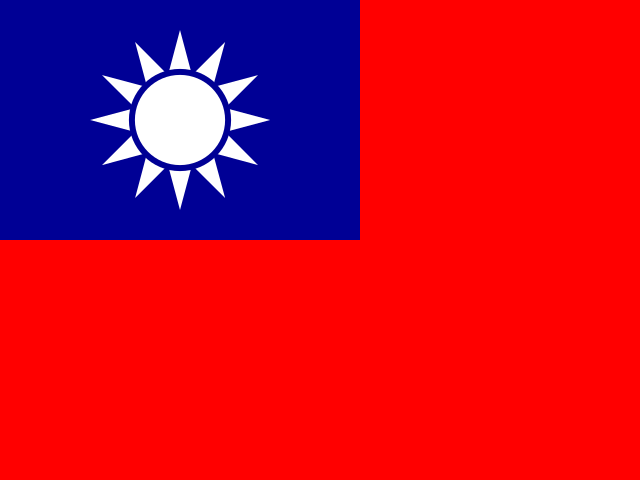
Status: Listed under China. The island and the islands near it are governed from Taipei by the Republic of China (Taiwan), whose flag is shown here.
Forms of the name
- 马公市 (official local form; used in Chinese (Simplified)) — Simplified Chinese spelling of the full city name used in the listing. The local administration writes it in traditional characters.
- Magong (national romanization; used in English, Spanish (Latin America), Spanish (Spain), German, Luxembourgish, French, Italian, Portuguese (Brazil), Portuguese (Portugal), Galician, Turkish, Dutch, Afrikaans, Polish, Swedish, Malay, Indonesian, Romanian, Danish, Norwegian (Bokmål), Hungarian, Finnish, Tagalog, Catalan, Croatian, Slovak, Uzbek, Zulu, Xhosa, Albanian, Slovenian, Swahili, Irish, Hausa, Yoruba, Welsh, Basque, Estonian, Icelandic, Maltese) — Unmarked Hanyu Pinyin for the short name «馬公», used by the city in English. Taiwan adopted Hanyu Pinyin as its standard in 2009.
- Mǎgōng (romanization, Hanyu Pinyin (1958), with tone marks; used in Chinese (Simplified), Chinese (Traditional), English) — Tone-marked Mandarin romanization of the short name.
- Mǎgōng Shì (romanization, Hanyu Pinyin (1958), with tone marks; used in Chinese (Simplified), Chinese (Traditional), English) — Tone-marked Mandarin romanization including the city designation «市».
- Ma-kung (romanization, Wade–Giles (1892); used in Czech, English) — Wade–Giles spelling without tone numbers, retained as the Czech article title.
- Má-keng (romanization, Pe̍h-ōe-jī (Taiwanese Hokkien); used in nan) — Taiwanese Hokkien romanization reflecting one local pronunciation of «馬公».
- Má-king (romanization, Pe̍h-ōe-jī (Taiwanese Hokkien); used in nan) — Taiwanese Hokkien pronunciation variant of «Má-keng».
- Makō (romanization, Hepburn romanization; used in Japanese, English) — Hepburn spelling of the Japanese reading of «馬公», with a macron marking the long final vowel.
- ማጎንግ (exonym from Amharic; used in Amharic) — Amharic Ethiopic transcription following the modern Latin spelling.
- ماغونغ (exonym from Arabic; used in Arabic) — Attested Arabic transcription of the modern romanized name.
- Maqonq (exonym from Azerbaijani; used in Azerbaijani) — Azerbaijani Latin transcription following the modern romanized name, using «q» for the velar consonant.
- Магонг (exonym from Bulgarian; used in Bulgarian, Macedonian, Serbian) — South Slavic Cyrillic transcription following the modern Latin spelling.
- মাগোং (exonym from Bengali; used in Bengali) — Bengali transcription following the modern romanized name.
- Μαγκόνγκ (exonym from Greek; used in Greek) — Greek transcription following the modern romanized name, with «γκ» for the velar sounds.
- ماگونگ (exonym from Persian; used in Persian, Urdu) — Shared Persian and Urdu transcription using «گ» for the velar consonant.
- માગોંગ (exonym from Gujarati; used in Gujarati) — Gujarati transcription following the modern romanized name.
- מאגונג (exonym from Hebrew; used in Hebrew) — Attested Hebrew transcription of the modern romanized name.
- मागोंग (exonym from Hindi; used in Hindi, Marathi, Nepali) — Devanagari transcription following the modern romanized name, shared by Hindi, Marathi and Nepali.
- Մագոնգ (exonym from Armenian; used in Armenian) — Armenian transcription following the modern romanized name.
- マコウ (exonym from Japanese; used in Japanese) — Katakana spelling of the Japanese reading of the short name «馬公».
- მაგონგი (exonym from Georgian; used in Georgian) — Georgian transcription following the modern romanized name, with nominative «-ი».
- ಮಾಗೊಂಗ್ (exonym from Kannada; used in Kannada) — Kannada transcription following the modern romanized name.
- 마궁시 (exonym from Korean; used in Korean) — Korean transcription of the Chinese name with «시», the Korean reading of the city designation «市».
- 마궁 (exonym from Korean; used in Korean) — Korean short form omitting the city designation «시».
- Magongas (exonym from Lithuanian; used in Lithuanian) — Lithuanian adaptation of the modern romanized name with masculine nominative «-as».
- Maguna (exonym from Latvian; used in Latvian) — Latvian transcription from Mandarin with «gun» for Pinyin «gong» and feminine nominative «-a».
- മാഗോങ് (exonym from Malayalam; used in Malayalam) — Malayalam transcription following the modern romanized name.
- ମାଗୋଙ୍ଗ (exonym from Odia; used in Odia) — Odia transcription following the modern romanized name.
- ਮਾਗੋਂਗ (exonym from Punjabi; used in Punjabi) — Gurmukhi transcription following the modern romanized name.
- Магун (exonym from Russian; used in Russian, Ukrainian, Kazakh, Tatar, Belarusian, Kyrgyz) — Established Russian Palladius transcription of Mandarin «Mǎgōng». The same spelling follows from the Ukrainian transcription and serves as a Russian-based rendering in several other Cyrillic languages.
- මාගොං (exonym from Sinhala; used in Sinhala) — Sinhala transcription following the modern romanized name, using anusvara for the final nasal.
- மாகோங் (exonym from Tamil; used in Tamil) — Tamil transcription following the modern romanized name.
- మాగోంగ్ (exonym from Telugu; used in Telugu) — Telugu transcription following the modern romanized name.
- หมากง (exonym from Thai; used in Thai) — Thai transcription from Mandarin, approximating the first syllable’s low tone and the final velar nasal.
- Mã Công (exonym from Vietnamese; used in Vietnamese) — Sino-Vietnamese reading of the traditional characters «馬公».
- 馬公市 (exonym from Chinese (Traditional); used in Chinese (Traditional), Japanese) — Locally official traditional-character spelling of the city name, also used in Japanese with a Japanese reading.
- 媽宮 (historical; used in Chinese (Traditional), nan) — Older settlement name associated with the local Mazu temple. It was replaced administratively by «馬公» in 1920 under Japanese rule.
- Mako (historical; used in English, Japanese) — Unmarked spelling of Japanese «Makō», the reading of «馬公» under Japanese rule after the 1920 name change and until 1945.
- 馬公鎮 (historical; used in Chinese (Traditional)) — Former administrative name as Magong Township, superseded when Magong became a city in 1981.
- 馬公 (variant; used in Chinese (Traditional), Japanese) — Traditional-character short form omitting the city designation «市».
- 马公 (variant; used in Chinese (Simplified)) — Simplified-character short form omitting the city designation «市».
- Magong City (variant; used in English) — English administrative form adding the designation «City».
- Makung (variant; used in English, Catalan, German, French, Italian, Dutch, Polish) — Older undivided spelling related to Wade–Giles «Ma-kung», found in maps and reference works.
- Magung (variant; used in English) — Attested alternative Latin spelling of the Mandarin name.
- Mǎgong (variant; used in Dutch) — Partially tone-marked Pinyin spelling attested as a Dutch alias.
Names in 79 languages
| Language | Name | Notes |
|---|---|---|
| English (en) | Magong | Uses the city’s modern unmarked Pinyin spelling. «Makung» is an older spelling, and «Magong City» adds the administrative designation. |
| Spanish (Latin America) (es-419) | Magong | Uses the modern unmarked Pinyin spelling. |
| Spanish (Spain) (es-ES) | Magong | Same as es-419. |
| German (de) | Magong | Uses the modern Pinyin spelling. «Makung» remains attested in German references. |
| Luxembourgish (lb) | Magong | Same as es-419. |
| French (fr) | Magong | Uses the modern Pinyin spelling. «Makung» is the older spelling. |
| Japanese (ja) | 馬公市 | Uses the traditional characters, read «まこうし». The short form «馬公» also has the katakana spelling «マコウ». |
| Chinese (Simplified) (zh-CN) | 马公市 | Simplified-character spelling of the city name. The short form «马公» omits «市». |
| Chinese (Traditional) (zh-TW) | 馬公市 | Locally official spelling in traditional characters. «馬公鎮» preceded city status in 1981, and «媽宮» is the pre-1920 name. |
| Russian (ru) | Магун | Uses the Palladius convention for Mandarin. The name is masculine. |
| Arabic (ar) | ماغونغ | Attested Arabic transcription of the modern romanized name. |
| Italian (it) | Magong | Same as French. |
| Portuguese (Brazil) (pt-BR) | Magong | Same as es-419. |
| Portuguese (Portugal) (pt-PT) | Magong | Same as pt-BR. |
| Galician (gl) | Magong | Same as es-419. |
| Korean (ko) | 마궁시 | Korean transcription with the city designation «시». The short form is «마궁». |
| Hindi (hi) | मागोंग | Hindi Devanagari transcription following the modern romanized name. |
| Urdu (ur) | ماگونگ | Urdu transcription of the modern romanized name using «گ». |
| Turkish (tr) | Magong | Same as es-419. |
| Dutch (nl) | Magong | Uses the modern Pinyin spelling. «Makung» is older, and «Mǎgong» is a partially tone-marked variant. |
| Afrikaans (af) | Magong | Same as es-419. |
| Polish (pl) | Magong | Same as French. |
| Swedish (sv) | Magong | Same as es-419. |
| Malay (ms) | Magong | Same as es-419. |
| Indonesian (id) | Magong | Same as es-419. |
| Bengali (bn) | মাগোং | Bengali transcription following the modern romanized name. |
| Vietnamese (vi) | Mã Công | Sino-Vietnamese reading of «馬公». |
| Thai (th) | หมากง | Thai transcription from Mandarin approximating the first syllable’s low tone and the final velar nasal. |
| Romanian (ro) | Magong | Same as es-419. |
| Czech (cs) | Ma-kung | The Czech article title retains the Wade–Giles spelling without tone numbers. |
| Danish (da) | Magong | Same as es-419. |
| Norwegian (Bokmål) (nb) | Magong | Same as es-419. |
| Hebrew (he) | מאגונג | Attested Hebrew transcription of the modern romanized name. |
| Greek (el) | Μαγκόνγκ | Greek transcription following the modern romanized name, with «γκ» for the velar sounds. |
| Hungarian (hu) | Magong | Same as es-419. |
| Finnish (fi) | Magong | Same as es-419. |
| Ukrainian (uk) | Магун | Ukrainian Cyrillic transcription from Mandarin with «гун» for Pinyin «gong». The name is masculine. |
| Persian (fa) | ماگونگ | Persian transcription of the modern romanized name using «گ». |
| Tamil (ta) | மாகோங் | Tamil transcription following the modern romanized name. |
| Tagalog (tl) | Magong | Same as es-419. |
| Telugu (te) | మాగోంగ్ | Telugu transcription following the modern romanized name. |
| Marathi (mr) | मागोंग | Marathi Devanagari transcription following the modern romanized name. |
| Catalan (ca) | Magong | Same as French. |
| Kazakh (kk) | Магун | Kazakh Cyrillic transcription following the Russian spelling. |
| Croatian (hr) | Magong | Same as es-419. |
| Serbian (sr) | Магонг | Serbian Cyrillic transcription following the modern romanized name. |
| Slovak (sk) | Magong | Same as es-419. |
| Bulgarian (bg) | Магонг | Bulgarian Cyrillic transcription following the modern romanized name. |
| Macedonian (mk) | Магонг | Macedonian Cyrillic transcription following the modern romanized name. |
| Azerbaijani (az) | Maqonq | Azerbaijani Latin transcription following the modern romanized name with «q» for the velar consonant. |
| Gujarati (gu) | માગોંગ | Gujarati transcription following the modern romanized name. |
| Punjabi (pa) | ਮਾਗੋਂਗ | Punjabi Gurmukhi transcription following the modern romanized name. |
| Malayalam (ml) | മാഗോങ് | Malayalam transcription following the modern romanized name. |
| Kannada (kn) | ಮಾಗೊಂಗ್ | Kannada transcription following the modern romanized name. |
| Uzbek (uz) | Magong | Same as es-419. |
| Zulu (zu) | Magong | Same as es-419. |
| Xhosa (xh) | Magong | Same as es-419. |
| Sinhala (si) | මාගොං | Sinhala transcription following the modern romanized name, with anusvara for the final nasal. |
| Albanian (sq) | Magong | Same as es-419. |
| Lithuanian (lt) | Magongas | Lithuanian adaptation with masculine nominative «-as». |
| Slovenian (sl) | Magong | Same as es-419. |
| Swahili (sw) | Magong | Same as es-419. |
| Odia (or) | ମାଗୋଙ୍ଗ | Odia transcription following the modern romanized name. |
| Irish (ga) | Magong | Same as es-419. |
| Hausa (ha) | Magong | Uses the modern Pinyin spelling. The Hausa article title adds «(taiwan)» to identify the place. |
| Yoruba (yo) | Magong | Same as es-419. |
| Armenian (hy) | Մագոնգ | Armenian transcription following the modern romanized name. |
| Amharic (am) | ማጎንግ | Amharic Ethiopic transcription following the modern romanized name. |
| Welsh (cy) | Magong | Same as es-419. |
| Latvian (lv) | Maguna | Latvian transcription from Mandarin, with «gun» for Pinyin «gong» and feminine nominative «-a». |
| Tatar (tt) | Магун | Tatar Cyrillic transcription following the Russian spelling. |
| Nepali (ne) | मागोंग | Nepali Devanagari transcription following the modern romanized name. |
| Georgian (ka) | მაგონგი | Georgian transcription following the modern romanized name, with nominative «-ი». |
| Belarusian (be) | Магун | Belarusian Cyrillic transcription following the Russian spelling. |
| Basque (eu) | Magong | Same as es-419. |
| Estonian (et) | Magong | Same as es-419. |
| Icelandic (is) | Magong | Same as es-419. |
| Maltese (mt) | Magong | Same as es-419. |
| Kyrgyz (ky) | Магун | Kyrgyz Cyrillic transcription following the Russian spelling. |
About
Magong is a port city and the seat of Penghu County in the Taiwan Strait, with a historic temple dedicated to Mazu. The city is listed under China and is governed from Taipei by the Republic of China (Taiwan), whose flag is shown on the page.
Notes
The name changed from «媽宮» to «馬公» in 1920 during Japanese rule. Magong Township became Magong City in 1981.
Identifiers: Wikidata Q701428 · JSON
This page in Markdown https://md.locations.elamur.ai/free/en/china/magong/