 Elamur Locations
Ceuta
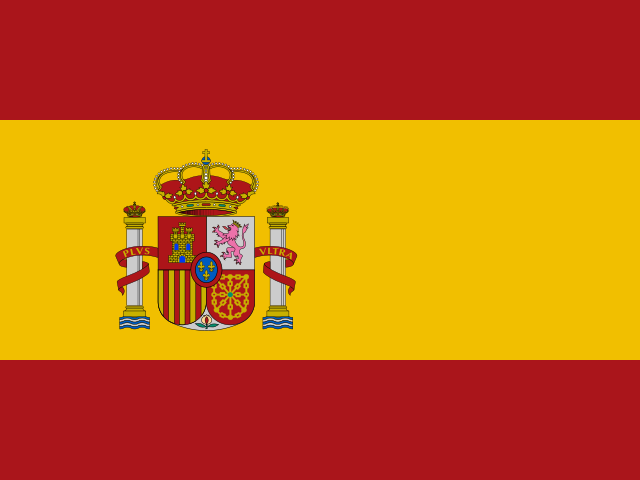 A settlement in Spain.
Forms of the name
- Ceuta (official local form; used in Spanish (Latin America), Spanish (Spain), English, German, Luxembourgish, French, Italian, Portuguese (Brazil), Portuguese (Portugal), Galician, Dutch, Afrikaans, Polish, Swedish, Malay, Indonesian, Vietnamese, Romanian, Czech, Danish, Norwegian (Bokmål), Hungarian, Finnish, Tagalog, Catalan, Croatian, Slovak, Zulu, Xhosa, Albanian, Slovenian, Swahili, Irish, Hausa, Yoruba, Welsh, Basque, Estonian, Icelandic, Maltese) — Official Spanish name in Latin script. Portuguese has the same spelling, which many other languages also retain.
- ሴውታ (exonym from Amharic; used in Amharic) — Amharic rendering of the modern name in Ethiopic script.
- سبتة (exonym from Arabic; used in Arabic) — Traditional Arabic name, normally written without vowel marks and used without the definite article.
- سَبْتَة (exonym from Arabic; used in Arabic) — Fully vocalized spelling of the traditional Arabic name.
- Sabtah (exonym from Arabic; used in English) — Arabic-derived name found in English, with final h representing the Arabic ending in pause.
- Sabta (exonym from Arabic; used in Latvian) — Latin-script rendering of the traditional Arabic name, also recorded in Latvian.
- Seuta (exonym from Azerbaijani; used in Azerbaijani, Lithuanian, Latvian, Albanian, Tatar, Uzbek) — Phonetic spelling with initial s shared by Azerbaijani and several other Latin-script languages.
- Сэўта (exonym from Belarusian; used in Belarusian) — Belarusian form in classical Taraškievica orthography, with «ў» representing the glide.
- Сеута (exonym from Bulgarian; used in Belarusian, Bulgarian, Kazakh, Kyrgyz, Macedonian, Russian, Serbian, Tatar, Ukrainian) — Shared Cyrillic adaptation of the modern Spanish name with initial s.
- সেউতা (exonym from Bengali; used in Bengali) — Bengali-script rendering of the Spanish name.
- Θέουτα (exonym from Greek; used in Greek) — Modern Greek form with initial theta reflecting the pronunciation of c in much of Spain.
- Κέουτα (exonym from Greek; used in Greek) — Alternative Greek spelling with initial kappa.
- سبته (exonym from Persian; used in Persian, Urdu) — Persian spelling of the traditional Arabic name, also recorded in Urdu.
- سئوتا (exonym from Persian; used in Persian) — Alternative Persian transcription of the modern Spanish name.
- સ્યુટા (exonym from Gujarati; used in Gujarati) — Gujarati rendering of the modern name.
- סאוטה (exonym from Hebrew; used in Hebrew) — Hebrew transcription of the modern name.
- सेउता (exonym from Hindi; used in Hindi, Marathi) — Hindi and Marathi Devanagari rendering of the modern name.
- सेउटा (exonym from Hindi; used in Hindi, Nepali) — Devanagari rendering with retroflex t, used in Nepali and in the Hindi article title.
- Սեուտա (exonym from Armenian; used in Armenian) — Armenian transcription of the modern name.
- セウタ (exonym from Japanese; used in Japanese) — Japanese katakana transcription of the modern name.
- სეუტა (exonym from Georgian; used in Georgian) — Georgian transcription of the modern name.
- ಸಿಯುಟಾ (exonym from Kannada; used in Kannada) — Kannada-script rendering of the modern name.
- 세우타 (exonym from Korean; used in Korean) — Korean Hangul transcription of the modern name.
- 사브타 (exonym from Korean; used in Korean) — Korean transcription of the Arabic name Sabta.
- Septa (exonym from Latin; used in Latin) — Latin name used in medieval and later Latin writing.
- Seūta (exonym from Latvian; used in Latvian) — Alternative Latvian spelling that marks the u as long.
- സെയൂറ്റ (exonym from Malayalam; used in Malayalam) — Malayalam-script transcription of the modern name using Malayalam sound values.
- ସେଉତା (exonym from Odia; used in Odia) — Odia-script transcription of the modern name using Odia sound values.
- ਸੇਉਤਾ (exonym from Punjabi; used in Punjabi) — Punjabi Gurmukhi transcription of the modern name.
- සියුටා (exonym from Sinhala; used in Sinhala) — Sinhala rendering of the modern name.
- සබ්තාහ් (exonym from Sinhala; used in Sinhala) — Sinhala rendering of the Arabic-derived form Sabtah.
- சியூடா (exonym from Tamil; used in Tamil) — Tamil rendering of the modern name.
- செயுத்தா (exonym from Tamil; used in Tamil) — Alternative Tamil rendering used in the Tamil article title.
- సియూటా (exonym from Telugu; used in Telugu) — Telugu rendering of the modern name.
- సియుటా (exonym from Telugu; used in Telugu) — Alternative Telugu rendering used in the Telugu article title.
- เซวตา (exonym from Thai; used in Thai) — Thai rendering of the modern Spanish name.
- Sebte (exonym from Turkish; used in Turkish) — Traditional Turkish exonym derived from the Arabic name.
- سبتہ (exonym from Urdu; used in Urdu) — Urdu rendering of the traditional Arabic name, with the Urdu form of final he.
- 休达 (exonym from Chinese; used in Chinese (Simplified)) — Established Mandarin name written in simplified characters.
- 休達 (exonym from Chinese; used in Chinese (Traditional)) — Traditional-character spelling of the same Mandarin name.
- 塞卜泰 (exonym from Chinese; used in Chinese (Simplified), Chinese (Traditional)) — Alternative Chinese transcription of the Arabic name Sabta.
- Septem Fratres (historical; used in Latin) — Ancient Latin geographical name meaning seven brothers, associated with the hills of the Ceuta peninsula.
- Septem (historical; used in Latin) — Short Latin name associated with the Roman settlement at Ceuta.
- ciutat autònoma de Ceuta (variant; used in Catalan) — Expanded Catalan administrative designation meaning autonomous city of Ceuta.
Names in 79 languages
| Language | Name | Notes |
|---|---|---|
| English (en) | Ceuta | English retains the Spanish spelling. Sabtah is an alternative rendering of the Arabic name. |
| Spanish (Latin America) (es-419) | Ceuta | The official Spanish name normally takes no article. Initial c is pronounced like s in Latin American Spanish. |
| Spanish (Spain) (es-ES) | Ceuta | The official spelling is shared with es-419. Initial c sounds like English th in much of Spain and like s in areas with seseo. |
| German (de) | Ceuta | German retains the Spanish spelling and normally uses the name without an article. |
| Luxembourgish (lb) | Ceuta | Same as English. |
| French (fr) | Ceuta | French retains the Spanish spelling and normally uses the name without an article. |
| Japanese (ja) | セウタ | Katakana transcription of the Spanish name. |
| Chinese (Simplified) (zh-CN) | 休达 | Established Mandarin name in simplified characters. «塞卜泰» renders the Arabic name. |
| Chinese (Traditional) (zh-TW) | 休達 | The Mandarin name has the same reading as in zh-CN, with traditional «達». |
| Russian (ru) | Сеута | Russian Cyrillic rendering of the Spanish name. It is feminine and declines. |
| Arabic (ar) | سبتة | The traditional Arabic name is feminine and takes no definite article. Its fully vocalized spelling is «سَبْتَة». |
| Italian (it) | Ceuta | Italian retains the Spanish spelling and normally uses the name without an article. |
| Portuguese (Brazil) (pt-BR) | Ceuta | The Portuguese spelling coincides with Spanish and was already used under Portuguese rule following the conquest in 1415. |
| Portuguese (Portugal) (pt-PT) | Ceuta | Same as pt-BR. |
| Galician (gl) | Ceuta | Same as English. |
| Korean (ko) | 세우타 | Hangul transcription of the modern Spanish name. «사브타» renders the Arabic name. |
| Hindi (hi) | सेउता | Devanagari rendering of the Spanish name. The spelling «सेउटा» also occurs. |
| Urdu (ur) | سبتہ | Urdu uses the traditional Arabic-derived name with final Urdu he. «سبته» also occurs. |
| Turkish (tr) | Sebte | Traditional Turkish exonym from the Arabic name Sabta. |
| Dutch (nl) | Ceuta | Same as English. |
| Afrikaans (af) | Ceuta | Same as English. |
| Polish (pl) | Ceuta | Polish retains the Spanish spelling and treats the name as feminine. |
| Swedish (sv) | Ceuta | Same as English. |
| Malay (ms) | Ceuta | Same as English. |
| Indonesian (id) | Ceuta | Same as English. |
| Bengali (bn) | সেউতা | Bengali-script rendering of the Spanish name. |
| Vietnamese (vi) | Ceuta | Same as English. |
| Thai (th) | เซวตา | Thai-script rendering of the modern Spanish name. |
| Romanian (ro) | Ceuta | Same as English. |
| Czech (cs) | Ceuta | Czech retains the Spanish spelling and treats the name as feminine. |
| Danish (da) | Ceuta | Same as English. |
| Norwegian (Bokmål) (nb) | Ceuta | Same as English. |
| Hebrew (he) | סאוטה | Hebrew-script transcription of the modern name. |
| Greek (el) | Θέουτα | The name is feminine with the article «η», and its initial theta reflects the pronunciation of c in much of Spain. «Κέουτα» is an alternative. |
| Hungarian (hu) | Ceuta | Same as English. |
| Finnish (fi) | Ceuta | Same as English. |
| Ukrainian (uk) | Сеута | Ukrainian Cyrillic rendering of the Spanish name. The name is feminine. |
| Persian (fa) | سبته | Persian uses the traditional Arabic-derived name. «سئوتا» transcribes the modern Spanish name. |
| Tamil (ta) | சியூடா | Tamil-script rendering of the modern name. «செயுத்தா» also occurs. |
| Tagalog (tl) | Ceuta | Same as English. |
| Telugu (te) | సియూటా | Telugu-script rendering of the modern name. «సియుటా» also occurs. |
| Marathi (mr) | सेउता | Marathi uses the same Devanagari rendering as the main Hindi spelling. |
| Catalan (ca) | Ceuta | Catalan retains the Spanish spelling. The expanded administrative designation is «ciutat autònoma de Ceuta». |
| Kazakh (kk) | Сеута | Kazakh uses the same Cyrillic spelling as Russian. |
| Croatian (hr) | Ceuta | Croatian retains the Spanish spelling and treats the name as feminine. |
| Serbian (sr) | Сеута | Serbian Cyrillic rendering of the modern name with initial s. |
| Slovak (sk) | Ceuta | Slovak retains the Spanish spelling and treats the name as feminine. |
| Bulgarian (bg) | Сеута | Bulgarian Cyrillic rendering of the modern name with initial s. |
| Macedonian (mk) | Сеута | Same as Bulgarian. |
| Azerbaijani (az) | Seuta | Azerbaijani represents the initial consonant with s. |
| Gujarati (gu) | સ્યુટા | Gujarati-script rendering of the modern name. |
| Punjabi (pa) | ਸੇਉਤਾ | Gurmukhi transcription of the Spanish name using Punjabi sound values. |
| Malayalam (ml) | സെയൂറ്റ | Malayalam-script transcription of the Spanish name using Malayalam sound values. |
| Kannada (kn) | ಸಿಯುಟಾ | Kannada-script rendering of the modern name. |
| Uzbek (uz) | Seuta | Same as Azerbaijani. |
| Zulu (zu) | Ceuta | Same as English. |
| Xhosa (xh) | Ceuta | Latin-script transcription retaining the official Spanish spelling. |
| Sinhala (si) | සියුටා | Sinhala rendering of the modern name. «සබ්තාහ්» reflects the Arabic name. |
| Albanian (sq) | Seuta | The phonetic spelling in the Albanian article title represents the initial consonant with s. The Spanish spelling Ceuta also occurs. |
| Lithuanian (lt) | Seuta | Lithuanian uses the phonetic spelling with initial s and treats the name as feminine. |
| Slovenian (sl) | Ceuta | Slovenian retains the Spanish spelling and treats the name as feminine. |
| Swahili (sw) | Ceuta | Same as English. |
| Odia (or) | ସେଉତା | Odia-script transcription of the Spanish name using Odia sound values. |
| Irish (ga) | Ceuta | Same as English. |
| Hausa (ha) | Ceuta | Same as English. |
| Yoruba (yo) | Ceuta | Same as English. |
| Armenian (hy) | Սեուտա | Armenian-script rendering of the Spanish name. |
| Amharic (am) | ሴውታ | Ethiopic-script rendering of the Spanish name. |
| Welsh (cy) | Ceuta | Same as English. |
| Latvian (lv) | Seuta | The Latvian feminine form has initial s. «Seūta» is another spelling, and «Sabta» reflects Arabic usage. |
| Tatar (tt) | Сеута | Tatar uses this spelling in Cyrillic. Its Latin-script counterpart is Seuta. |
| Nepali (ne) | सेउटा | Nepali uses the Devanagari rendering with retroflex t. |
| Georgian (ka) | სეუტა | Georgian-script rendering of the Spanish name. |
| Belarusian (be) | Сеута | This is the spelling in standard Belarusian orthography. Taraškievica uses «Сэўта». |
| Basque (eu) | Ceuta | Same as English. |
| Estonian (et) | Ceuta | Same as English. |
| Icelandic (is) | Ceuta | Same as English. |
| Maltese (mt) | Ceuta | Same as English. |
| Kyrgyz (ky) | Сеута | Same as Kazakh. |
About
Ceuta is an autonomous city of Spain on the North African shore of the Strait of Gibraltar, and Morocco claims it. Its port sits at the foot of Monte Hacho, near the eastern tip of the peninsula.
Notes
Portugal captured Ceuta in 1415. When Portugal regained its independence in 1640, Ceuta remained with the Spanish Crown, and Portugal formally recognized Spanish sovereignty in 1668. The Punjabi, Malayalam, Odia and Xhosa entries follow transcription or borrowing conventions on limited direct evidence.
Identifiers: Wikidata Q5823 · JSON
This page as Markdown: https://md.locations.elamur.ai/free/en/spain/ceuta/