 Elamur Locations
Kpalimé
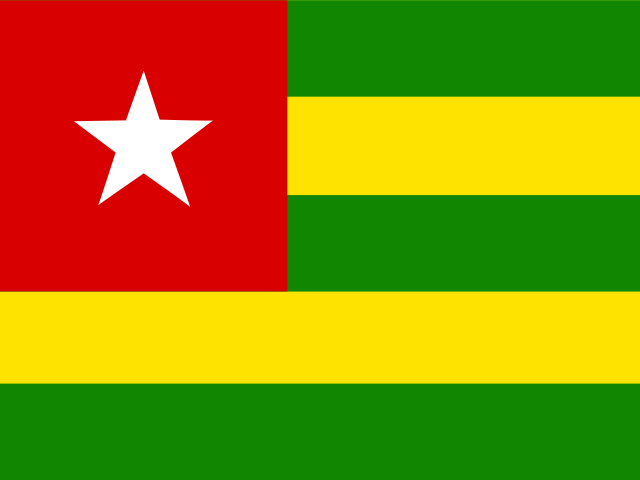 A settlement in Togo.
Forms of the name
- Kpalimé (official local form; used in English, Spanish (Latin America), Spanish (Spain), German, Luxembourgish, French, Italian, Portuguese (Brazil), Portuguese (Portugal), Galician, Turkish, Dutch, Afrikaans, Polish, Swedish, Indonesian, Romanian, Czech, Danish, Tagalog, Catalan, Croatian, Slovak, Azerbaijani, Uzbek, Zulu, Xhosa, Albanian, Slovenian, Swahili, Irish, Hausa, Yoruba, Welsh, Basque, Estonian, Icelandic, Maltese) — The official French spelling preserves the initial «kp» of the local name and marks the final vowel with an acute accent.
- ክፓሊሜ (exonym from Amharic; used in Amharic) — Amharic transcription of the current Togolese name in Ethiopic script.
- كباليمي (exonym from Arabic; used in Arabic) — Arabic reference spelling uses «ب» to approximate the p sound in the initial cluster.
- Кпалімэ (exonym from Belarusian; used in Belarusian) — Belarusian Cyrillic transcription of the current name.
- Кпалиме (exonym from Bulgarian; used in Bulgarian, Russian, Kazakh, Serbian, Macedonian, Tatar, Kyrgyz) — A Cyrillic rendering of the current name shared by Bulgarian, Russian, Kazakh, Serbian, Macedonian, Tatar and Kyrgyz.
- কেপালিমে (exonym from Bengali; used in Bengali) — The Bengali reference spelling inserts a vowel between the initial consonants.
- Κπαλιμέ (exonym from Greek; used in Greek) — Greek transcription retains both initial consonants and marks the final syllable with an accent.
- کپالیمه (exonym from Persian; used in Persian) — Persian transcription uses «پ» for p and final «ه» for the final vowel.
- કપાલિમે (exonym from Gujarati; used in Gujarati) — Gujarati reference transcription of the current name.
- קפאלימה (exonym from Hebrew; used in Hebrew) — Hebrew reference transcription of the current name.
- कापेलीमे (exonym from Hindi; used in Hindi) — The Hindi reference transcription separates the initial consonants with a vowel.
- Կպալիմե (exonym from Armenian; used in Armenian) — Armenian transcription of the current name.
- パリメ (exonym from Japanese; used in Japanese) — The established Japanese katakana form follows the older spelling Palimé.
- კპალიმე (exonym from Georgian; used in Georgian) — Georgian transcription retains both initial consonants.
- ಕಪಾಲಿಮ್ (exonym from Kannada; used in Kannada) — The supplied Kannada reference spelling has a final consonant with virama.
- 크팔리메 (exonym from Korean; used in Korean) — Hangul transcription opens with «크» to represent the initial k before p.
- Kpalimė (exonym from Lithuanian; used in Lithuanian) — Lithuanian adapts final «é» to «ė».
- ക്പാലിമേ (exonym from Malayalam; used in Malayalam) — Malayalam transcription preserves the initial consonant sequence.
- कपालिमे (exonym from Marathi; used in Marathi) — Marathi reference transcription of the current name in Devanagari.
- क्पालिमे (exonym from Nepali; used in Nepali) — Nepali Devanagari transcription preserves the initial consonant sequence.
- କ୍ପାଲିମେ (exonym from Odia; used in Odia) — Odia transcription preserves the initial consonant sequence.
- ਕਪਾਲਿਮੇ (exonym from Punjabi; used in Punjabi) — Punjabi Gurmukhi transcription of the current name.
- ක්පලිමේ (exonym from Sinhala; used in Sinhala) — Sinhala reference transcription uses a vowelless sign for the initial k.
- கஃபாலிமெ (exonym from Tamil; used in Tamil) — Tamil reference transcription uses the aytam in its rendering of the initial sounds.
- క్పాలిమే (exonym from Telugu; used in Telugu) — Telugu transcription preserves the initial consonant sequence.
- คปาลีเม (exonym from Thai; used in Thai) — Thai transcription represents both initial consonants and the final vowel.
- Кпаліме (exonym from Ukrainian; used in Ukrainian) — The Ukrainian reference spelling uses «і» for the middle vowel.
- کپالیمے (exonym from Urdu; used in Urdu) — The Urdu article title uses final bari ye for the final vowel.
- کپالیمی (exonym from Urdu; used in Urdu) — The Urdu label instead uses final choti ye.
- 帕利梅 (exonym from Chinese; used in Chinese (Simplified), Chinese (Traditional)) — The Mandarin transcription follows the older spelling Palimé and uses the same characters in simplified and traditional writing.
- Palimé (historical; used in French, German, Danish, Spanish (Latin America), Spanish (Spain), Finnish, Croatian) — Older spelling without initial k, used in colonial-era references and retained in current Spanish and Finnish references.
- Agome Palime (historical; used in German) — Historical name recorded in German references, combining the regional name Agome with Palime.
- Kpalime (variant; used in English, Spanish (Latin America), Spanish (Spain), German, French, Danish, Croatian, Polish, Romanian, Finnish, Malay, Norwegian (Bokmål), Vietnamese, Latvian) — The current spelling without the acute accent is also the usual form in several language references.
- Palime (variant; used in English, German, Spanish (Latin America), Spanish (Spain), Finnish) — Accentless spelling of the older name Palimé.
Names in 79 languages
| Language | Name | Notes |
|---|---|---|
| English (en) | Kpalimé | English usually retains the official French spelling. «Kpalime» is the unaccented variant. |
| Spanish (Latin America) (es-419) | Palimé | Spanish references retain the older spelling «Palimé». The official Togolese form «Kpalimé» also occurs. |
| Spanish (Spain) (es-ES) | Palimé | Same as es-419. |
| German (de) | Kpalimé | Current German references use the Togolese spelling. «Palimé» and «Agome Palime» occur in historical references. |
| Luxembourgish (lb) | Kpalimé | Same as English. |
| French (fr) | Kpalimé | The current official spelling retains the initial «kp». Older French references use «Palimé». The city name normally takes no article. |
| Japanese (ja) | パリメ | Established katakana transcription of the older spelling «Palimé». |
| Chinese (Simplified) (zh-CN) | 帕利梅 | Mandarin transcription of the older spelling «Palimé». |
| Chinese (Traditional) (zh-TW) | 帕利梅 | Same as zh-CN. |
| Russian (ru) | Кпалиме | Established Russian Cyrillic transcription of the current Togolese name. It is indeclinable. |
| Arabic (ar) | كباليمي | Arabic transcription uses «ب» for p and takes no added definite article. |
| Italian (it) | Kpalimé | Same as English. |
| Portuguese (Brazil) (pt-BR) | Kpalimé | Same as English. |
| Portuguese (Portugal) (pt-PT) | Kpalimé | Same as pt-BR. |
| Galician (gl) | Kpalimé | Same as English. |
| Korean (ko) | 크팔리메 | Hangul transcription uses «크» to represent the initial k before p. |
| Hindi (hi) | कापेलीमे | Hindi reference transcription in Devanagari with a vowel between the first consonants. |
| Urdu (ur) | کپالیمے | Urdu transcribes the current Togolese name. The reference label also gives «کپالیمی». |
| Turkish (tr) | Kpalimé | Same as English. |
| Dutch (nl) | Kpalimé | Same as English. |
| Afrikaans (af) | Kpalimé | Same as English. |
| Polish (pl) | Kpalimé | Same as English. |
| Swedish (sv) | Kpalimé | Same as English. |
| Malay (ms) | Kpalime | Malay references use the current Togolese spelling without the acute accent. |
| Indonesian (id) | Kpalimé | Same as English. |
| Bengali (bn) | কেপালিমে | Bengali reference transcription inserts a vowel between the initial consonants. |
| Vietnamese (vi) | Kpalime | Same as Malay. |
| Thai (th) | คปาลีเม | Thai transcription of the current Togolese name, preserving both initial consonants. |
| Romanian (ro) | Kpalimé | Same as English. |
| Czech (cs) | Kpalimé | Same as English. |
| Danish (da) | Kpalimé | Danish references use the current Togolese spelling and record the older «Palimé». |
| Norwegian (Bokmål) (nb) | Kpalime | Same as Malay. |
| Hebrew (he) | קפאלימה | Hebrew reference transcription of the current Togolese name. |
| Greek (el) | Κπαλιμέ | Greek transcription retains «κπ» and marks stress on the final syllable. |
| Hungarian (hu) | Kpalimé | Same as English. |
| Finnish (fi) | Palimé | Finnish references retain the older spelling «Palimé». The official Togolese form «Kpalimé» is also recorded. |
| Ukrainian (uk) | Кпаліме | Ukrainian Cyrillic transcription of the current Togolese name, using «і» for the middle vowel. |
| Persian (fa) | کپالیمه | Persian transcription of the current Togolese name uses «پ» for p. |
| Tamil (ta) | கஃபாலிமெ | Tamil reference transcription of the current name uses the aytam in the initial sequence. |
| Tagalog (tl) | Kpalimé | Same as English. |
| Telugu (te) | క్పాలిమే | Telugu transcription retains the initial consonant sequence. |
| Marathi (mr) | कपालिमे | Marathi Devanagari transcription of the current Togolese name. |
| Catalan (ca) | Kpalimé | Same as English. |
| Kazakh (kk) | Кпалиме | Kazakh Cyrillic transcription of the current Togolese name. |
| Croatian (hr) | Kpalimé | Croatian uses the current Togolese spelling. Older references also give «Palimé». |
| Serbian (sr) | Кпалиме | Serbian Cyrillic transcription of the current Togolese name. |
| Slovak (sk) | Kpalimé | Same as English. |
| Bulgarian (bg) | Кпалиме | Bulgarian Cyrillic transcription of the current Togolese name. |
| Macedonian (mk) | Кпалиме | Macedonian Cyrillic transcription of the current Togolese name. |
| Azerbaijani (az) | Kpalimé | Same as English. |
| Gujarati (gu) | કપાલિમે | Gujarati transcription of the current Togolese name. |
| Punjabi (pa) | ਕਪਾਲਿਮੇ | Punjabi Gurmukhi transcription of the current Togolese name. |
| Malayalam (ml) | ക്പാലിമേ | Malayalam transcription preserves the initial consonant sequence. |
| Kannada (kn) | ಕಪಾಲಿಮ್ | The recorded Kannada reference spelling ends in a vowelless m. |
| Uzbek (uz) | Kpalimé | Same as English. |
| Zulu (zu) | Kpalimé | Same as English. |
| Xhosa (xh) | Kpalimé | Same as English. |
| Sinhala (si) | ක්පලිමේ | Sinhala transcription uses a vowelless sign for the initial k. |
| Albanian (sq) | Kpalimé | Same as English. |
| Lithuanian (lt) | Kpalimė | Lithuanian adapts the final vowel to «ė», a feminine ending. |
| Slovenian (sl) | Kpalimé | Same as English. |
| Swahili (sw) | Kpalimé | Same as English. |
| Odia (or) | କ୍ପାଲିମେ | Odia transcription preserves the initial consonant sequence. |
| Irish (ga) | Kpalimé | Same as English. |
| Hausa (ha) | Kpalimé | Same as English. |
| Yoruba (yo) | Kpalimé | Same as English. |
| Armenian (hy) | Կպալիմե | Armenian transcription of the current Togolese name. |
| Amharic (am) | ክፓሊሜ | Amharic transcription of the current Togolese name in Ethiopic script. |
| Welsh (cy) | Kpalimé | Same as English. |
| Latvian (lv) | Kpalime | Same as Malay. |
| Tatar (tt) | Кпалиме | Tatar Cyrillic transcription of the current Togolese name. |
| Nepali (ne) | क्पालिमे | Nepali Devanagari transcription preserves the initial consonant sequence. |
| Georgian (ka) | კპალიმე | Georgian transcription preserves both initial consonants. |
| Belarusian (be) | Кпалімэ | Belarusian Cyrillic transcription of the current Togolese name. |
| Basque (eu) | Kpalimé | Same as English. |
| Estonian (et) | Kpalimé | Same as English. |
| Icelandic (is) | Kpalimé | Same as English. |
| Maltese (mt) | Kpalimé | Same as English. |
| Kyrgyz (ky) | Кпалиме | Kyrgyz Cyrillic transcription of the current Togolese name. |
About
Kpalimé is a city in southwestern Togo's Plateaux Region, near the Ghanaian border and Mount Agou. It serves a coffee- and cocoa-growing area known for its forested hills and waterfalls.
Notes
The older spelling Palimé remains current in some languages, and the Japanese and Mandarin names reflect that spelling.
Identifiers: Wikidata Q995413 · JSON
This page as Markdown: https://md.locations.elamur.ai/free/en/togo/kpalime/