 Elamur Locations
Khiva
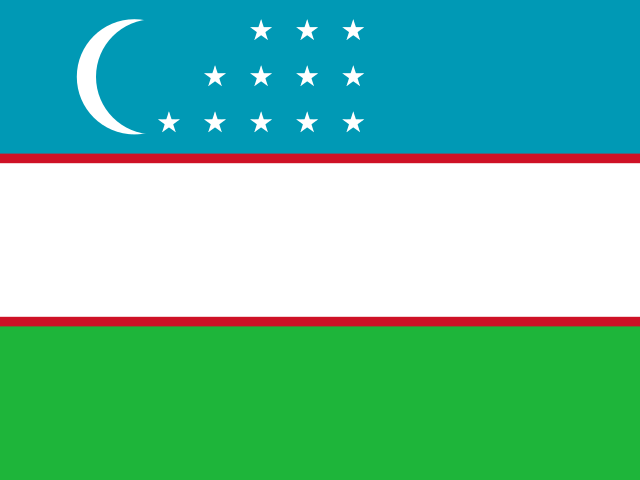 A settlement in Uzbekistan; local name Xiva.
Forms of the name
- Xiva (official local form; used in Uzbek, German, Dutch, Hungarian) — Official Uzbek Latin spelling. Uzbek x represents a voiceless velar or uvular fricative, the sound commonly written kh in English.
- ኺቫ (exonym from Amharic; used in Amharic) — Ethiopic transcription of Khiva, using the ኸ series for the initial fricative.
- خيوة (exonym from Arabic; used in Arabic) — Conventional Arabic spelling, with initial khāʾ and final tāʾ marbūṭa.
- Xivə (exonym from Azerbaijani; used in Azerbaijani) — Azerbaijani adaptation of the local name with final ə.
- Хіва (exonym from Belarusian; used in Belarusian, Ukrainian) — Belarusian and Ukrainian Cyrillic spelling, with і for the first vowel.
- খিভা (exonym from Bengali; used in Bengali) — Bengali transcription of Khiva, using খ for kh and ভ for v.
- Khivà (exonym from Catalan; used in Catalan) — Catalan adaptation of Khiva with an accent marking final stress.
- Chiva (exonym from Czech; used in Czech, Slovak, Swedish, Lithuanian, Latin, English) — Czech and Slovak spelling with ch for the initial fricative, also conventional in Swedish and Lithuanian and attested in Latin.
- Chiwa (exonym from German; used in German, Polish, Dutch, Swedish) — Traditional German transcription and the established Polish spelling. In both, ch represents the initial fricative and w represents the v sound.
- Χίβα (exonym from Greek; used in Greek) — Greek transcription with χ for the initial fricative and β for v.
- Jiva (exonym from Spanish; used in Spanish (Latin America), Spanish (Spain)) — Conventional Spanish exonym with j for the initial fricative.
- Hiiva (exonym from Estonian; used in Estonian) — Traditional Estonian adaptation with initial h and doubled i.
- خیوه (exonym from Persian; used in Persian) — Conventional Persian spelling of the city's name.
- خیوق (exonym from Persian; used in Persian) — Older Persian name found in historical accounts and geographical writing.
- Hiva (exonym from Finnish; used in Finnish, Hungarian, Latvian, Slovenian, Estonian) — Established Finnish, Hungarian, Latvian and Slovenian adaptation with h for the initial fricative, also attested in Estonian.
- ખીવા (exonym from Gujarati; used in Gujarati) — Gujarati transcription of Khiva with ખ for kh.
- חיווה (exonym from Hebrew; used in Hebrew) — Modern Hebrew spelling with ח for the initial fricative and doubled ו for the consonant v.
- ख़ीवा (exonym from Hindi; used in Hindi) — Hindi transcription with a nukta under ख to distinguish the fricative from aspirated k.
- खीवा (exonym from Hindi; used in Hindi) — Hindi spelling variant without the nukta.
- Խիվա (exonym from Armenian; used in Armenian) — Armenian transcription with Խ for the initial fricative.
- ヒヴァ (exonym from Japanese; used in Japanese) — Japanese katakana rendering with ヴァ for va.
- ხივა (exonym from Georgian; used in Georgian) — Georgian transcription using ხ for the initial fricative.
- Хиуа (exonym from Kazakh; used in Kazakh) — Conventional Kazakh Cyrillic form, with у in the position corresponding to Uzbek v.
- ಖೀವ (exonym from Kannada; used in Kannada) — Kannada transcription of Khiva using ಖ for kh.
- 히바 (exonym from Korean; used in Korean) — Conventional Hangul transcription, with ㅎ for the initial fricative and ㅂ for v.
- Кыйба (exonym from Kyrgyz; used in Kyrgyz) — Traditional Kyrgyz form used for the city in Kyrgyz reference works.
- ഖീവ (exonym from Malayalam; used in Malayalam) — Malayalam transcription of Khiva using ഖ for kh.
- खिवा (exonym from Marathi; used in Marathi) — Marathi transcription in Devanagari using ख for kh.
- खिभा (exonym from Nepali; used in Nepali) — Nepali transcription of Khiva using ख for kh and भ for v.
- ଖିଭା (exonym from Odia; used in Odia) — Odia transcription of Khiva using ଖ for kh and ଭ for v.
- ਖ਼ੀਵਾ (exonym from Punjabi; used in Punjabi) — Punjabi Gurmukhi transcription with ਖ਼ for the initial fricative.
- Quiva (exonym from Portuguese; used in Portuguese (Brazil), Portuguese (Portugal)) — Portuguese exonym with qui for the first syllable, also used in Portuguese for the historical khanate.
- Khiva (exonym from Russian; used in English, Luxembourgish, French, Italian, Portuguese (Brazil), Portuguese (Portugal), Galician, Dutch, Afrikaans, Swedish, Malay, Indonesian, Vietnamese, Danish, Norwegian (Bokmål), Hungarian, Finnish, Tagalog, Zulu, Xhosa, Albanian, Swahili, Irish, Hausa, Yoruba, Welsh, Basque, Icelandic, Maltese) — International spelling reflecting Russian «Хива», widespread in English from the nineteenth century through the Soviet period and still standard in English and several other languages. French usage also retains this spelling.
- Хива (exonym from Russian; used in Russian, Bulgarian, Serbian, Macedonian, Kyrgyz, Tatar, Uzbek) — Standard Russian form in imperial, Soviet and present-day usage, shared by several Cyrillic languages. It also matches the Uzbek Cyrillic spelling.
- Хейвак (exonym from Russian; used in Russian) — Russian rendering of the older name Khayvak, encountered in historical accounts of the oasis.
- ඛීවා (exonym from Sinhala; used in Sinhala) — Sinhala transcription of Khiva with ඛ for kh.
- கீவா (exonym from Tamil; used in Tamil) — Tamil transcription of Khiva using க for the initial consonant.
- ఖీవా (exonym from Telugu; used in Telugu) — Telugu transcription of Khiva with ఖ for kh.
- ฆีวา (exonym from Thai; used in Thai) — Thai transcription with ฆ for the initial consonant and ว for v.
- Hive (exonym from Turkish; used in Turkish) — Traditional Turkish name for the city and the khanate that had its capital there.
- Хивә (exonym from Tatar; used in Tatar) — Tatar Cyrillic form with final ә.
- خیوا (exonym from Urdu; used in Urdu) — Urdu spelling with initial خ and a final alif.
- خیوہ (exonym from Urdu; used in Urdu) — Alternative Urdu spelling with final ہ.
- 希瓦 (exonym from Chinese; used in Chinese (Simplified), Chinese (Traditional)) — Mandarin phonetic rendering written identically in Simplified and Traditional Chinese.
- Khiveh (variant; used in English, Catalan) — Older rendering found in Western geographical writing and retained as a Catalan reference alias.
- Chiveh (variant; used in Dutch) — Older Dutch spelling recorded alongside the current endonym and the international spelling.
- Khiwa (variant; used in Catalan) — Alternative Western spelling with w, recorded in Catalan reference usage.
Names in 79 languages
| Language | Name | Notes |
|---|---|---|
| English (en) | Khiva | Established English spelling, reflecting Russian «Хива». Khiveh and Chiva occur in older writing. |
| Spanish (Latin America) (es-419) | Jiva | Traditional Spanish exonym, with j for the initial fricative. Khiva also occurs. |
| Spanish (Spain) (es-ES) | Jiva | Same as es-419. |
| German (de) | Xiva | German reference usage adopts the Uzbek Latin spelling. Chiwa is the traditional German transcription, and the city name normally takes no article. |
| French (fr) | Khiva | Established French spelling with kh for the initial fricative. The city name normally takes no article. |
| Japanese (ja) | ヒヴァ | Established katakana transcription, with ヴァ for va. |
| Chinese (Simplified) (zh-CN) | 希瓦 | Mandarin phonetic transcription with the characters «希瓦». |
| Chinese (Traditional) (zh-TW) | 希瓦 | Same as zh-CN. |
| Russian (ru) | Хива | Established Russian name from imperial and Soviet usage, still current and grammatically feminine. Хейвак occurs in historical accounts. |
| Arabic (ar) | خيوة | Conventional Arabic spelling with initial khāʾ and no definite article. |
| Italian (it) | Khiva | Same as English. |
| Portuguese (Brazil) (pt-BR) | Quiva | Portuguese exonym with qui for the first syllable. Khiva also occurs. |
| Portuguese (Portugal) (pt-PT) | Quiva | Same as pt-BR. |
| Korean (ko) | 히바 | Established Hangul transcription with ㅎ for the initial fricative and ㅂ for v. |
| Hindi (hi) | ख़ीवा | Devanagari transcription using ख़ for the initial fricative. खीवा also occurs. |
| Turkish (tr) | Hive | Traditional Turkish exonym, also used in the name of the former khanate. |
| Dutch (nl) | Xiva | Dutch reference usage adopts the Uzbek spelling. Khiva, Chiwa and the older Chiveh also occur. |
| Polish (pl) | Chiwa | Established Polish exonym with ch for the initial fricative and w for v. The name is feminine. |
| Swedish (sv) | Chiva | Traditional Swedish spelling with ch. Khiva and Xiva also occur. |
| Malay (ms) | Khiva | Same as English. |
| Indonesian (id) | Khiva | Same as English. |
| Bengali (bn) | খিভা | Bengali transcription following Khiva, with খ for kh and ভ for v. |
| Vietnamese (vi) | Khiva | Same as English. |
| Thai (th) | ฆีวา | Thai transcription with ฆ for the first consonant and ว for v. |
| Romanian (ro) | Khiva | Latin-script transcription following the international spelling Khiva. |
| Czech (cs) | Chiva | Established Czech exonym with ch for the initial fricative. The name is feminine. |
| Danish (da) | Khiva | Same as English. |
| Hebrew (he) | חיווה | Hebrew transcription using ח for the initial fricative and doubled ו for v. |
| Norwegian (Bokmål) (nb) | Khiva | Same as English. |
| Greek (el) | Χίβα | Greek transcription with χ for the first consonant and β for v. The feminine article is «η». |
| Hungarian (hu) | Hiva | Traditional Hungarian adaptation with h. Xiva is also used in reference works. |
| Finnish (fi) | Hiva | Established Finnish spelling with h. The international spelling Khiva also appears. |
| Ukrainian (uk) | Хіва | Established Ukrainian Cyrillic spelling with і. The name is feminine. |
| Urdu (ur) | خیوا | Urdu spelling with final alif. خیوہ is an alternative. |
| Persian (fa) | خیوه | Conventional Persian spelling. خیوق is an older Persian name. |
| Tamil (ta) | கீவா | Tamil transcription following Khiva, with க for the initial consonant. |
| Tagalog (tl) | Khiva | Latin-script transcription following the international spelling Khiva. |
| Telugu (te) | ఖీవా | Telugu transcription following Khiva, with ఖ for kh. |
| Marathi (mr) | खिवा | Marathi Devanagari transcription following Khiva, with ख for kh. |
| Catalan (ca) | Khivà | Catalan adaptation of Khiva with a grave accent marking final stress. Khiwa and Khiveh also occur. |
| Kazakh (kk) | Хиуа | Conventional Kazakh Cyrillic form, with у corresponding to v in the Uzbek spelling. |
| Croatian (hr) | Hiva | Croatian Latin-script transcription of the Uzbek name, using h for x. |
| Slovak (sk) | Chiva | Same as Czech. |
| Bulgarian (bg) | Хива | Established Bulgarian Cyrillic form, grammatically feminine. |
| Azerbaijani (az) | Xivə | Azerbaijani adaptation with final ə. |
| Gujarati (gu) | ખીવા | Gujarati transcription following Khiva, with ખ for kh. |
| Punjabi (pa) | ਖ਼ੀਵਾ | Punjabi Gurmukhi transcription with ਖ਼ for the initial fricative. |
| Malayalam (ml) | ഖീവ | Malayalam transcription following Khiva, with ഖ for kh. |
| Kannada (kn) | ಖೀವ | Kannada transcription following Khiva, with ಖ for kh. |
| Uzbek (uz) | Xiva | Official Uzbek Latin spelling. In Uzbek Cyrillic the name is «Хива». |
| Serbian (sr) | Хива | Serbian Cyrillic transcription of the Uzbek name with х for x. |
| Galician (gl) | Khiva | Same as English. |
| Zulu (zu) | Khiva | Latin-script transcription following the international spelling Khiva. |
| Sinhala (si) | ඛීවා | Sinhala transcription following Khiva, with ඛ for kh. |
| Albanian (sq) | Khiva | Latin-script transcription following the international spelling Khiva. |
| Xhosa (xh) | Khiva | Same as Zulu. |
| Lithuanian (lt) | Chiva | Established Lithuanian spelling with ch for the initial fricative. The name is feminine. |
| Afrikaans (af) | Khiva | Latin-script transcription following the international spelling Khiva. |
| Slovenian (sl) | Hiva | Slovenian adaptation with h for the initial fricative. The name is feminine. |
| Luxembourgish (lb) | Khiva | Latin-script transcription following the international spelling Khiva. |
| Swahili (sw) | Khiva | Latin-script transcription following the international spelling Khiva. |
| Odia (or) | ଖିଭା | Odia transcription following Khiva, using ଖ for kh and ଭ for v. |
| Irish (ga) | Khiva | Same as English. |
| Hausa (ha) | Khiva | Latin-script transcription following the international spelling Khiva. |
| Yoruba (yo) | Khiva | Latin-script transcription following the international spelling Khiva. |
| Armenian (hy) | Խիվա | Armenian transcription with Խ for the initial fricative. |
| Amharic (am) | ኺቫ | Ethiopic transcription following Khiva, using the ኸ series for the initial fricative. |
| Welsh (cy) | Khiva | Latin-script transcription following the international spelling Khiva. |
| Latvian (lv) | Hiva | Established Latvian adaptation with h for the initial fricative. The name is feminine. |
| Tatar (tt) | Хивә | Tatar Cyrillic adaptation with final ә. Хива also occurs. |
| Nepali (ne) | खिभा | Nepali Devanagari transcription following Khiva, with ख for kh and भ for v. |
| Georgian (ka) | ხივა | Georgian transcription using ხ for the initial fricative. |
| Belarusian (be) | Хіва | Established Belarusian Cyrillic spelling with і. The name is feminine. |
| Basque (eu) | Khiva | Same as English. |
| Estonian (et) | Hiiva | Established Estonian adaptation with doubled i. Hiva and the local spelling Xiva also occur. |
| Icelandic (is) | Khiva | Latin-script transcription following the international spelling Khiva. |
| Macedonian (mk) | Хива | Macedonian Cyrillic transcription with х for the initial fricative. |
| Maltese (mt) | Khiva | The international spelling is used in Maltese reference works. Xiva also occurs. |
| Kyrgyz (ky) | Кыйба | Traditional Kyrgyz exonym. The Russian-based Хива also occurs. |
About
Khiva is an oasis city in Uzbekistan's Khorezm Region near the lower Amu Darya. It was the capital of the Khanate of Khiva, and its walled inner city, Itchan Kala, is a UNESCO World Heritage Site.
Notes
Itchan Kala designates the walled inner city. Khorezm is the wider historical region and the name of the modern region.
Identifiers: Wikidata Q486195 · JSON
This page as Markdown: https://md.locations.elamur.ai/free/en/uzbekistan/khiva/